Welcome to this month’s BVRC Spotlight. Special thanks always to Don Banta K5DB for his amazing commitment to amateur radio and to BVRC, and for being kind enough to allow me to assist with producing content for the Spotlight.
BVRC is growing fast. And it’s already chock full of interesting members whom we all want to get to know. To help us do that, and with the outstanding support of our superb webmaster Roger KJ4QIS, we are increasing the “frequency” [sorry] of the Spotlight feature from quarterly to monthly.
And to start things off, I was delighted to play “20 Questions” with and put the spotlight on Mark Whatley, K5XH. Everyone who knows Mark knows him as brilliant, thoughtful, helpful, and an all-round great person.
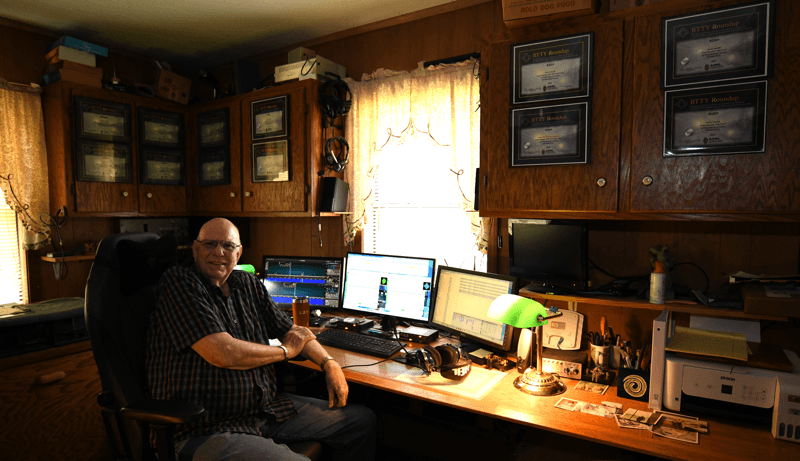
Here’s what Mark had to say:
What is your present callsign, and what other callsigns have you held?
I was first licensed as a novice in 1963 and was assigned the callsign WN5IED. When I upgraded to Conditional I became WA5IED. Then the FCC grandfathered Conditionals to Generals and I was still WA5IED. Kept WA5IED when I upgraded to Advanced in about 1969. I stayed WA5IED when I upgraded to Extra. When the FCC allowed Extras to apply for a 1×2 callsign I applied for and received my present callsign – K5XH.
What modes do you operate? If you could operate only one mode, what would it be, and why?
In my early days, I operated mostly CW for casual operation and AM for a few nets. Later, I had a Heathkit HW-12, which only worked on 80 meters, so for quite some time I operated only 80-meter SSB. I became interested in RTTY in the late 1960s, and it quickly became my favorite mode. Now that RTTY is pretty much extinct, I’ve devolved to operating mostly FT8.
What bands do you operate? If you could operate on only one band, what would it be, and why?
I have capability to operate on all the HF bands 80-10. However, I would say the 20 meters is my go-to band for DX work.

What equipment do you most operate?
Currently I use Flex Radio equipment. I also have an ICOM 7100 that I can use as a backup.
When were you first licensed, and where?
Fayetteville, Arkansas in 1963.
Who, if anyone, most influenced your entry into ham radio, and how?
I can’t say I ever had an Elmer. I did have a future father-in-law that had a shack and allowed me to use his equipment. He was WA5ATK (SK). Spending time in his shack is what really got me interested in the hobby.
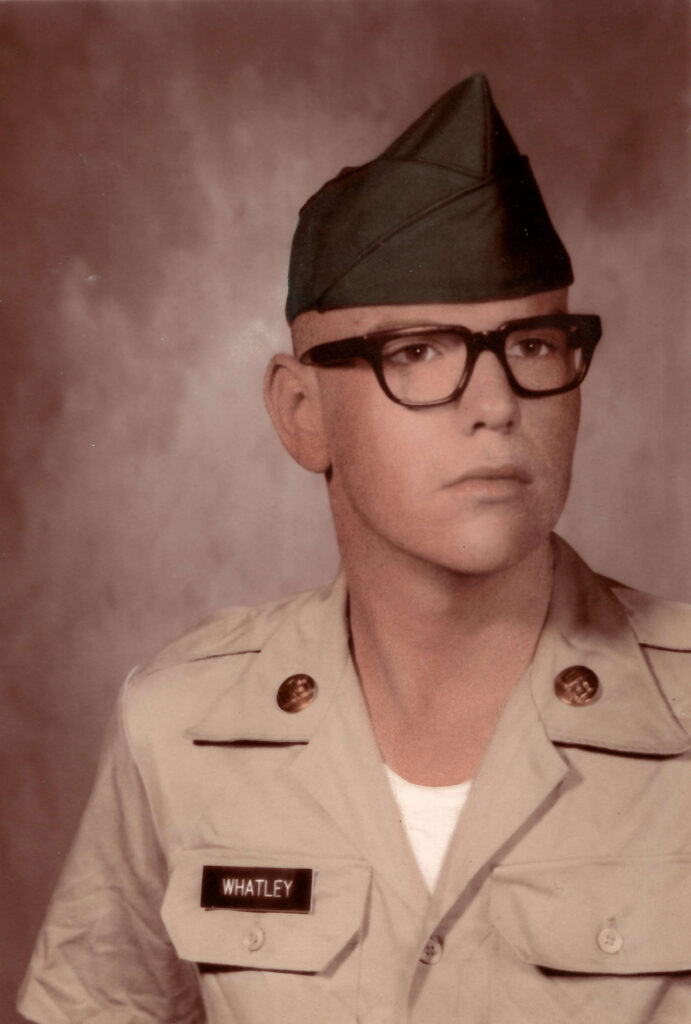
What attracted you to amateur radio?
I would have to say it was the technical part of the hobby. Particularly some of the more technical things, such as RTTY and, later, EME operation.
How has amateur radio influenced your life, particularly in ways not directly related to ham radio?
I think the troubleshooting skills I developed in my earlier Ham adventures have helped me in about every other endeavor I have attempted. Being able to look at a problem and be able to formulate a plan to solve it has helped me many times.
What are your favorite activities in amateur radio?
Chasing DX and RTTY contests.
If you remember your first contact, who was it with? Do you remember your thoughts and emotions regarding the experience at the time?
I do not remember the details but I know it was a CW contact with another Novice in Texas. I was using a borrowed KnightKit T50 transmitter and a Heathkit Mohican receiver. Quite a thrill for a dumb highschool kid!
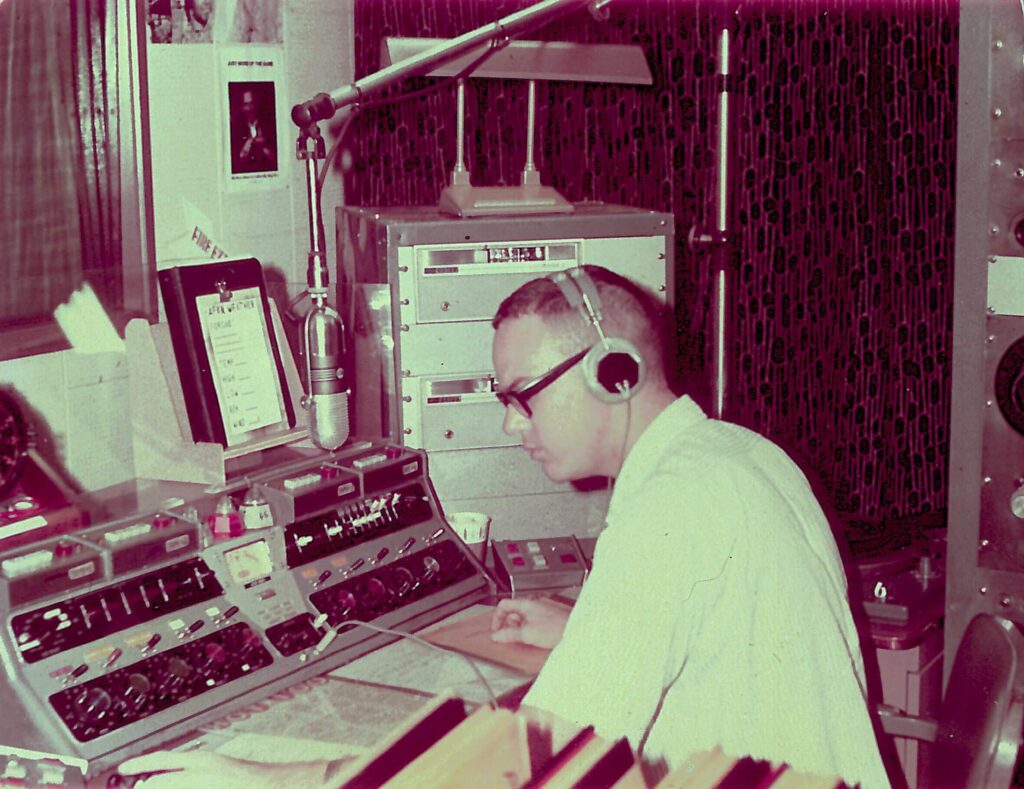
What single event “Wowed” you as a “golden moment” in your amateur radio experience? (A special contact, a special “eyeball QSO,” etc.)
My first EME (Earth-Moon-Earth) contact was the most exciting. Back in the 70’s this was the peak of what was possible with the available equipment.
Is there a piece of ham equipment that you once had, sold/traded/gave away, that you wish you had never parted with?
Unlike many of my fellow ham friends, I never have a lot of different radios. I did have an ICOM HF radio (I forget the model). I gave that to a friend. I still have my old FT-1000 and my old Flex 5000. I did sell the 5000 to a stranger and he immediately blew it up because he didn’t know anything about Flex radios. So I bought it back, had it repaired, and now it sits in the closet. Because of this one experience, I am not into selling or trading radios.
What behaviors in amateurs do you most like to see?
Helping each other, particularly the newer members in the hobby.
What behaviors in amateurs do you least like to see? (What drives you a little bit nuts when you hear it on the air?)
Some of the stuff you hear on the air is really disgusting. Trying to get a new Ham to try HF must come with a warning – Some frequencies are best left unheard.
If you were to give every new ham one piece of advice, what would it be?
Read the “Radio Amateur’s Code” and do your best to follow it.
If you were to recommend one thing new amateurs NOT do, what would it be?
Baofeng radios and repeaters are great but please don’t stop there! Do not pass up exploring other facets of this hobby.

If you were to recommend one thing new amateurs be sure to DO, what would it be?
Join a club (if it is a good one like BVRC). If that is not possible, then look into other branches of the hobby and try to learn more about a new mode or activity on your own.
If you were king/queen for a day, what one thing would you change in amateur radio?
Simplify the FCC website.
Besides amateur radio, how do you spend your discretionary time?
Watch TV, pet the cat. I have a very exciting life.
What is one fact about you that few people know?
I once had a job flying corporate aircraft including turboprops and jets.
Thanks, Mark!