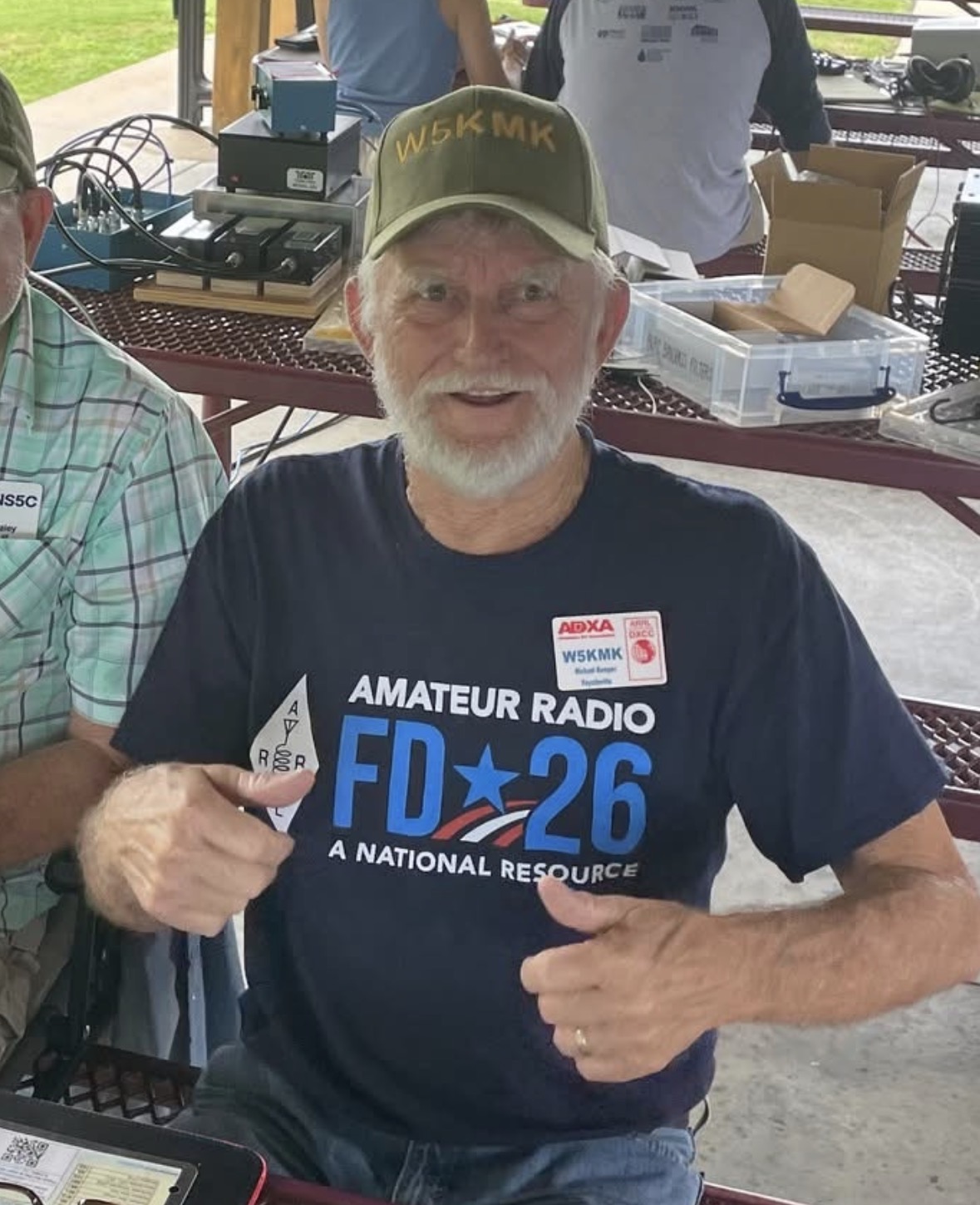
I met Michael Kemper (W5KMK) as he was serving as a volunteer examiner at a recent BVARC testing session in Elkins. I was immediately impressed with this bright fellow ham who is so nice to visit and share stories with, and who always has a smile on his face. Service to others seems to be in his DNA and is where he and his wife have devoted much of their lives. I learned a lot about this pillar of BVARC connecting with Michael, and you can too as you read the transcript of our terrific “20 Questions” interview.
DE K5XS
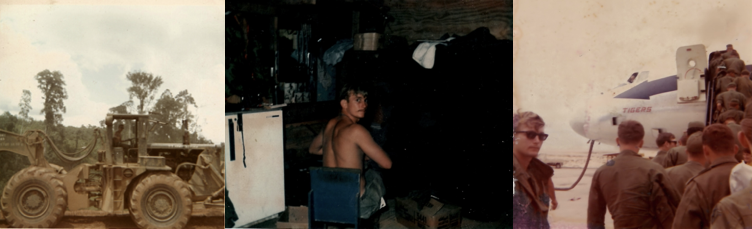
Heavy equipment operator in the U.S. Army on his first tour in Vietnam in 1968, when things were ‘hot’ for U.S. forces in that nation. Thank you for your service to our nation, Michael!
Here’s what Michael had to say:
It’s so nice to have you here, Michael. Very briefly, can you please share what brought you to Northwest Arkansas and when that was? What do you remember of the move? What do you most like about living here?
In a whole different lifetime…about a hundred years ago, I once lived in Mulberry, AR.; home of Dave’s Hobby Shop, (W5SWL.com). It was at that time that I fell in love with the scenery and people of NWA. When my wife and I retired from our remodeling business we wanted to move to a warmer climate and this area filled the bill. We moved here in April of 2011 and It was a horrendous move in that if it could go wrong…it did. In a fit of desperation, we found our current QTH at the bottom of Round Mountain. While it is far from a perfect situation–When is it ever?–we’ve managed to carve out a comfortable homestead here and have made some very good friends.
When were you first licensed, and where?
I was first licensed on August 16, 2022 at the Shilo Museum in Springdale, Arkansas where I first met BVRC’s dynamic duo: K5DB, Don Banta and W5XNA, Tom Northfell. Little did I know at the time but they both would become great mentors for me in the hobby and two people that I now consider good friends.
What initially attracted you to amateur radio?
On August 23, 1992 Hurricane Andrew made landfall in Florida as a Cat 5 storm with sustained winds at 165 MPH and it destroyed 99% of Homestead, Florida. We had recently sold the 43-foot boat we were living on in Key West and had travelled to Bend Oregon. My brother was still in Florida living on a tiny sailboat anchored just offshore from downtown Key West. I didn’t know if he was alive or washed out to sea and there was no phone service to or from Key West. Remember…1992…this was before the days of a cell phone in every pocket. Well, I thought maybe the Red Cross could help. So, sure enough, an American Red Cross volunteer in Bend Oregon contacted a ham operator that she knew, he contacted a ham somewhere in Florida who contacted a ham down in Key West and that ham actually went out on foot, found my brother, and reported back to the ham in Oregon with the good news that my brother was just fine and the Red Cross volunteer relayed the news to me. I knew right then and there that someday I would have to give back to both the Red Cross and to amateur radio operation. We then left Oregon and went to set up house in Sioux Falls, South Dakota, where my wife was from. We started a remodeling business and spent the next 22 years volunteering with the Family Services portion of the American Red Cross and worked the end of Red Cross help with Hurricane Andrew, local disasters, as well as hurricanes in Louisiana and the Atlantic Islands Basin.
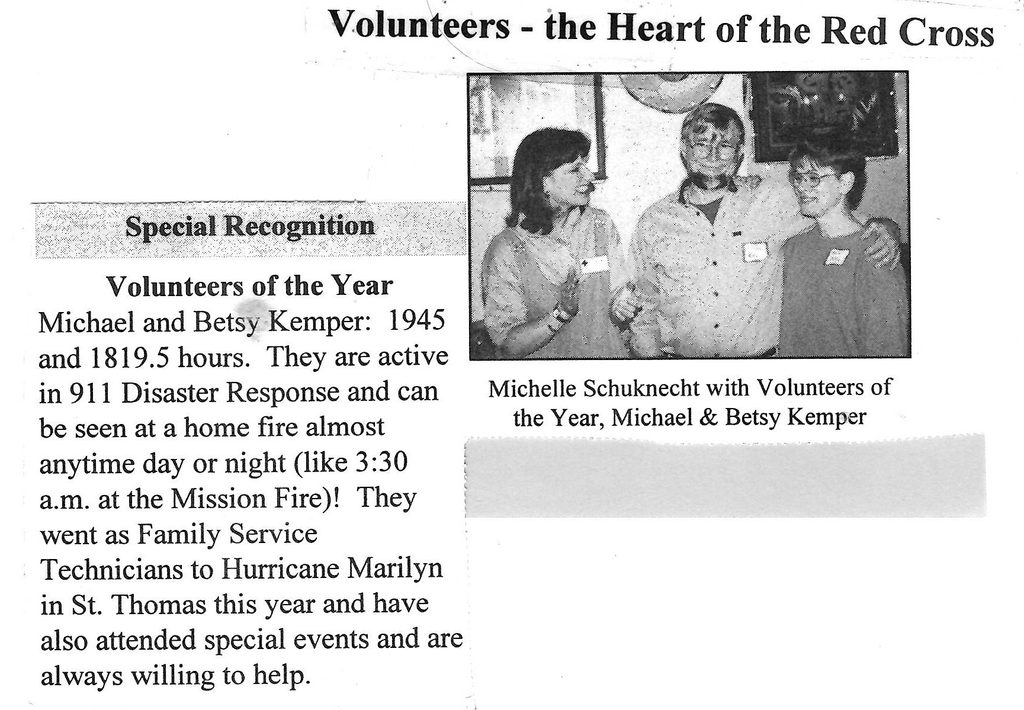
Here Michael and Betsy are being recognized as Red Cross ‘Volunteers of the Year’ for their exceptional volunteerism. Note the incredible number of volunteer hours for which they were recognized: 1945 hours for Michael and 1819.5 hours for Betsy. The couple are volunteer veterans of Hurricane Andrew in Florida, Hurricane Lili in Louisiana, and Hurricane Marilyn in the U.S. Virgin Islands.
Who, if anyone, most influenced your entry into ham radio, and how did they do that?
See 3. Above.
What was your first station (rig, antenna)? How well did it work?
Having just ticked off a premium item on my bucket list by earning my Technician and General class licenses just prior to my 73rd birthday, my wife and I headed to Joplin for their hamfest. While we were there, I purchased a Yaesu FTDX-1200 and a 40-meter Carolina Windom antenna. I’ll let you figure out which of my two new mentors suggested that it would be good to try a Carolina Windom for my first antenna. I was thrilled beyond measure how well the choices worked and was amazed at the help offered by BVARC members to get my new station set up and running.
How has amateur radio influenced your life, especially in ways not directly related to ham radio?
By trying to apply The Amateur’s Code while in my shack, I’ve noticed that the Code just naturally spills over into my daily life.
What do you find most appealing about the Bella Vista Area Radio Club?
The genuine enthusiasm to help others enjoy the hobby by BVRC members and the monthly list of activities.
What are your favorite amateur radio activities in general?
Chasing DX and working special events are easily my most favorite activities.
What modes and bands do you operate? If you could operate only one mode and band, what would it be, and why?
Hmmmm, well, that’s a tough one. While chasing DX I exclusively work FT8 or FT4 as the situation requires. For working special events I prefer SSB but will also use FT8 or FT4. If I could only operate one mode and band I suppose I would operate FT8 on 20 meters because there is, almost without exception, always some sort of traffic on it.
What equipment do you most operate?
My current primary equipment is a Yaesu FT-710 AESS, LDG AT1000PROII tuner, and an Ameritron AL-80B Desktop kilowatt amplifier coupled with a homebrew 160-meter OCF dipole and a 20M – 6M KIO hex beam.
If you remember your first contact, who was it with? Do you remember your thoughts and emotions regarding the experience at the time?
My first contact was on 20 meters with a guy in Ontario on SSB. I was absolutely floored that I could communicate with someone that clearly…that far away by using a piece of wire strung between two trees.
What fix/hack have you made that you are most proud (a radio you fixed, a difficult problem you solved, an ingenious solution you came up with, etc.)?
Building the KIO hex beam from a few kit parts and a bunch of locally gathered random parts and then having it not only actually work but in practice has performed greatly.
And do you remember an “Oh dang! I shouldn’t have done THAT!” moment when you had an “Uh oh” experience?
Oh yeah…I definitely had a “Oh Snap” moment when, with the help of my wife and daughter, I tried to put up a 30’ homebrew mast using three chain-link fence top rails.
A note from K5XS: Do not try this at home, friends!
What single event “Wowed” you as a “golden moment” in your amateur radio experience? (A special contact, a special “eyeball QSO,” etc.)
Making not one but two contacts with the Russian DX Team RI1FJL/MM while they were under way on a sailboat in the Arctic Circle while transmitting with 45 watts on my homebrew 160M dipole. (Are you kidding me??!!)
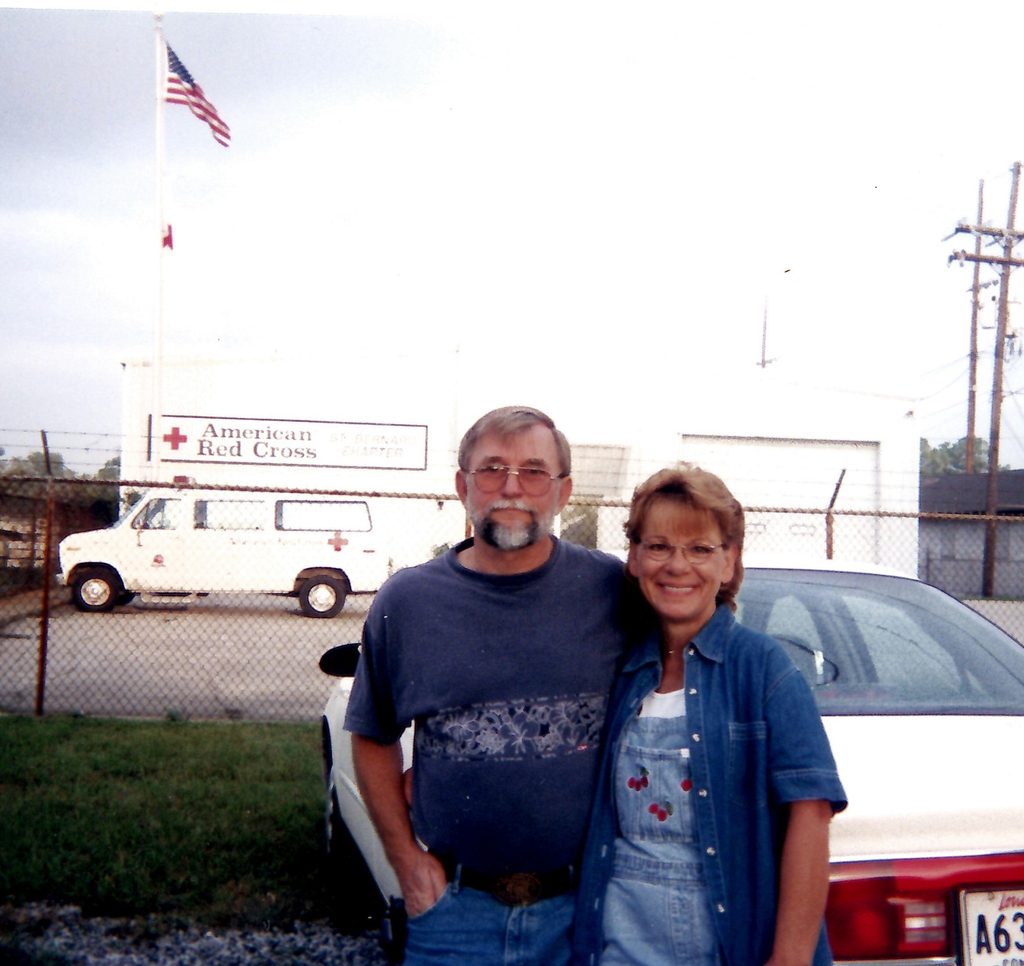
Michael and his wife Betsy are true servant leaders, shown here in Louisiana in conjunction with their service to the Red Cross in response to Hurricane Lili 1996
What behaviors in amateurs do you most like to see?
The genuine willingness to share their help, knowledge, and experience(s) to help you have a better and more fun experience in the hobby.
If you were to recommend one thing new amateurs NOT do, what would it be?
Don’t buy until you try. And if you use YouTube for a reference…watch more than one post before you take it for truth.
If you were to recommend one thing new amateurs be sure to DO, what would it be?
Don’t be shy about asking questions and keep in mind there are no dumb questions.
If you were king/queen for a day, what one thing would you change in amateur radio?
I think it would be nice if all amplifiers were to include six meters regardless of what their potential output is.
Besides amateur radio, how do you spend your discretionary time?
Taking care of our small acreage and all the critters that we enjoy watching. (A plethora of birds, deer, opossums, raccoons and of course Lloyd…the feral peacock that came ambling down our driveway a couple of years ago and adopted my wife, Betsy.)
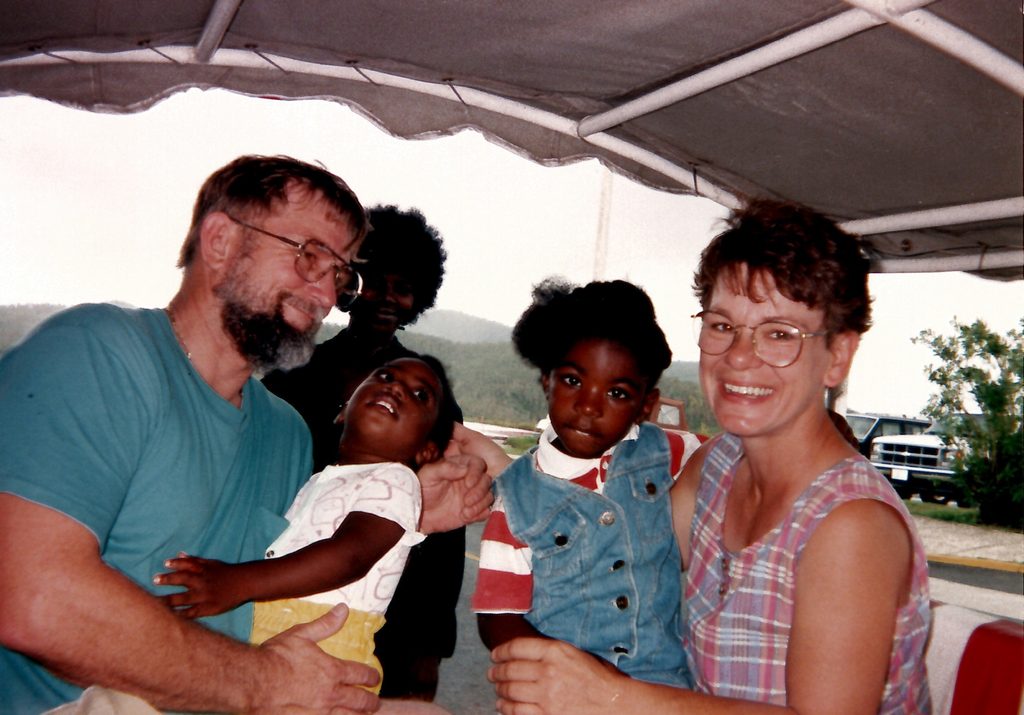
Michael and Betsy serving humanity yet again in St Thomas in 1995
What is one fact about you that few people know?
While living in Key West, Florida I earned my U.S. Coast Guard Captain’s certification for a vessel up to 400 tons and up to 250 passengers. I was also a P.A.D.I. certified SCUBA instructor and Rescue Diver instructor.
Michael, I understand that you, sir, are a master knot tier. How did that come to be? Were there any knots that stood out as difficult to learn? Please share a favorite story where a well-tied knot saved the day or where a poorly tied knot had bad consequences.
Well, first off, I would dispute that I am a master knot tier. At best, I will admit that I tie a few knots very well and quite easily. My love for knots came at a very early age. At six years old, while visiting my aunt that worked at the local five & dime, I discovered there was power in tying knots when I tied the doors together and nobody could get in or out. My aunt convinced me that if I would like to be seven someday, I best untie the doors and let the traffic resume to buy their sewing goods and whatnot. Much later in life, during the summer of my 16th year, I took a job as a deck hand on a tugboat and that was the beginning of my official knot tying. Tying a good bowline knot using a two-inch diameter rope was essential for passing safely through the locks on the Intercoastal canal [K5XS note: See https://en.wikipedia.org/wiki/Intracoastal_Waterway] Tying a bad bowline knot could mean disaster for the locks, the cargo, and the tugboat. Much, much later on in life, after my two tours in Vietnam, I was involved in Boy Scout leadership training for many years and Trail Life USA leadership training after that. That is truly when tying knots became second nature to me. Much of my time in both of those organizations was spent teaching hundreds of adults and boys, how to properly tie good knots. After all…It’s knot fun!…Oh yes it is! ;+)
Jeff Bean, KJ5ROE, Gentry
Kelly Conner, KJ5RPW, Elkins
Andrew Cooper, KJ5ROF, Springdale
Brett Cotham, KJ5RRN, Rogers
David Cundiff, KJ5RPQ, Rogers
Lori Davenport, Bella Vista
Ben Johnson, KE5YQD, Little Rock
Scot Joubert, KJ5ROW, Green Forest
Steven Mullins, KJ5RPC, Elkins
Casey Nesselhauf, KJ5RRF, Bentonville
Justin Phillips, KJ5ROT, Fayetteville
Josh Pierson, KJ5RNZ, Fayetteville
Weston Pierson, KJ5ROZ, Fayetteville
Evert Pinto, KG5CJM, Springdale
Hector Rios, KJ5ROQ, Springdale
Ray Bingham, KC7HOP, Elm Springs
Nancy Bingham, KC7ZTE, Elm Springs
Hunter Comer, KJ5RJH, Alma
James Myers, KJ5RJQ, Van Buren
David Alderson, KJ5RJU, Bentonville
Del Hines, KJ5RJV, Shirley
Denise Snow, KEØKRH, Bella Vista
Dale Green, AF6OE, Fayetteville
Tim Rulo, KJ5QQO, Bella Vista
Michael Burns, KJ5QFZ, Pocola OK